3.1 — Catarsis Collective
Frazadas
Project description
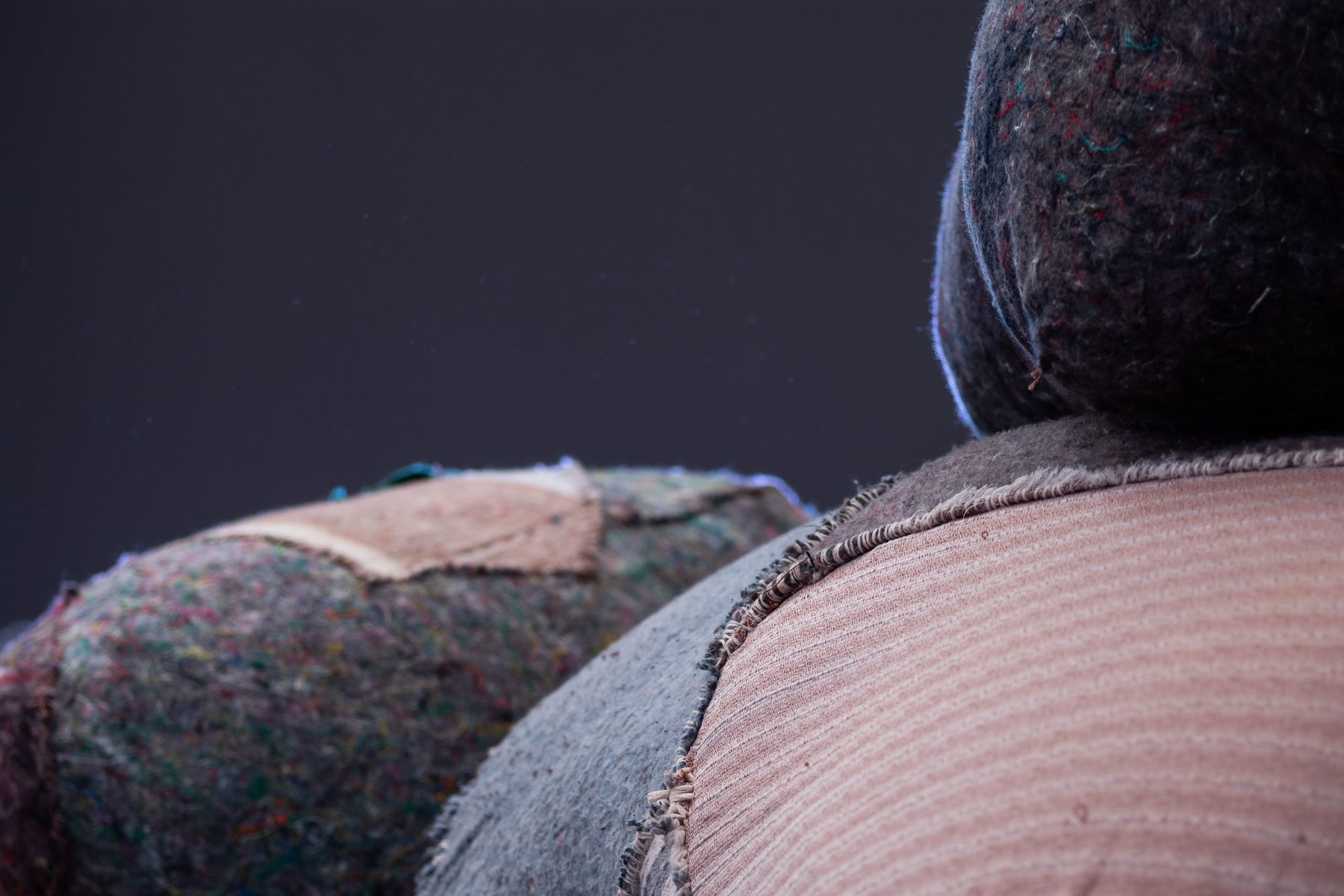
"FRAZADAS" (Blankets) is an artistic/social project conceived as an urban action, focused on those who sleep on the street. After several nights carefully watching a woman who slept at the entrance to the garage of Myriam's parents' home, the need to do something about that situation began to take shape.
The project involved exchanging two new blankets for the old one each person used to cover themselves. It was thanks to this horizontal arrangement between equals that we were able to address many of our ethical concerns regarding the making of this artistic action.
The 33 exchanges took place over three winters between 2011 and 2013. "We sat down and sewed blankets tirelessly, giving rise to an invented anatomy, a soft landscape made up of countless objects related to one another as though they were members of a family of different sizes sharing the same non-place."
Curatorial text
What do the women, men, children who sleep on the street dream of? To search each morning and find the scraps to survive one more day. To wake knowing that within this legal tangle there are no rights. To experience for years that nothing improves, everything gets worse.
The humiliation of being unable to change almost anything, and of clinging to the "almost" that leads to another wait. (Berger says)
Is this a film for them? Is it a film for me?
Art as deployed in "Frazadas" confronts us with its particular gaze. It acts as an essential medium for building and traversing this undeniable contemporary reality, by documenting this unheard state of emergency.
What is the political meaning of all this?
A body, several bodies twisted by cold and the open air, covered by a rectangle (a blanket) — as night falls I think and feel an urgent gaze, this leads me to Bacon's images. Looking at the starry sky, the same one we all see, it asks that your path be long.
Solidary, antagonistic, or indifferent? The decay of the lie seeps through. All the shadows have already fallen asleep.
— Sergio Bazán, Autumn 2018
Exchanges · 2011–2013
Frazadas at Centro Cultural Haroldo Conti · 2019
Video
3.2 — Catarsis Collective
Reses (Carcasses)
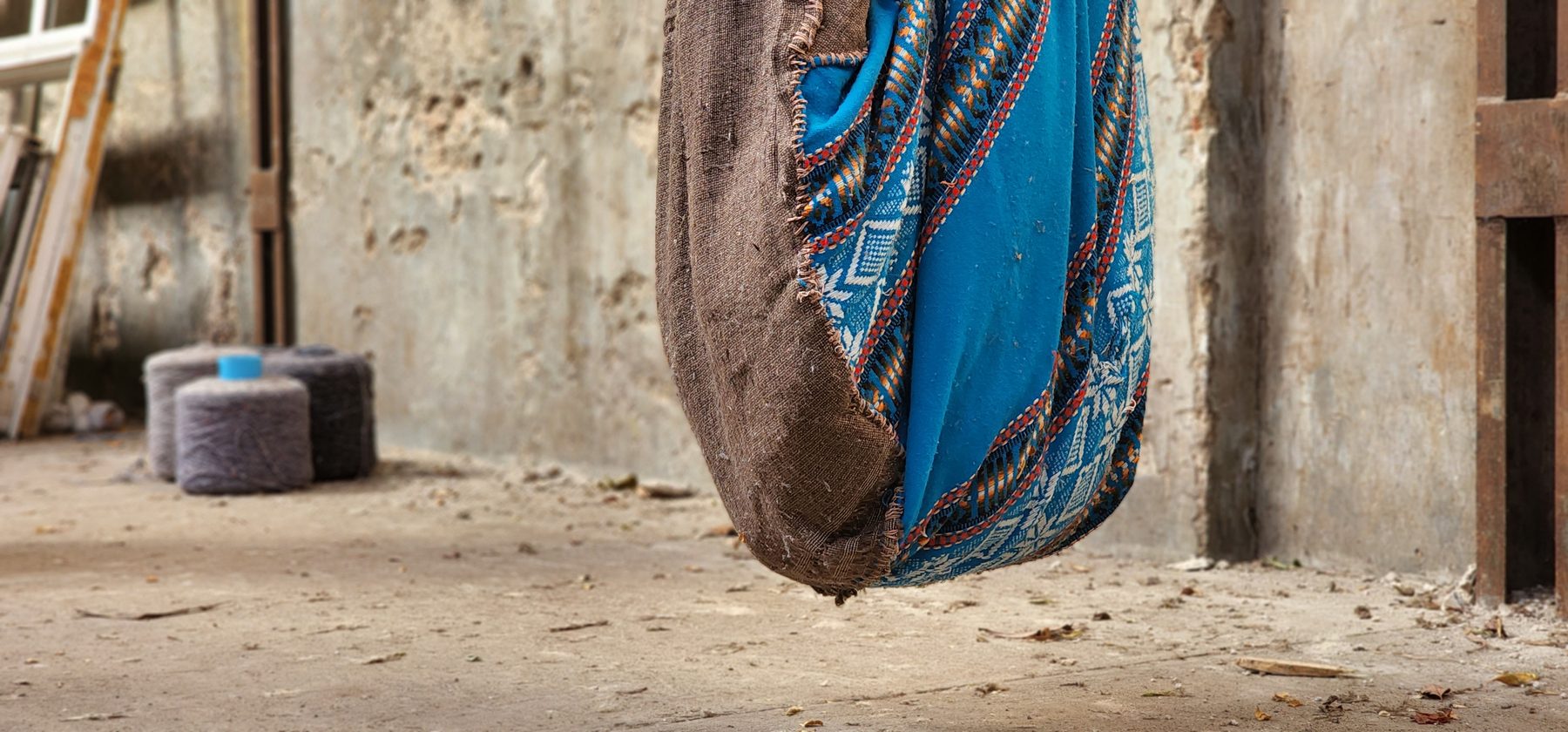
Derived from the FRAZADAS project (2008–2018), RESES (Carcasses) comprises a penetrable textile installation and a video projection. The sacks, hand-sewn, were made from repurposed blankets sourced from former textile factories and private families.
Entering the forest of carcasses promises an experience of soft friction. Some elements from the industrial world appear carelessly thrown on the floor — dismembered mechanical bodies, remnants of a once-prosperous industrial past.
RESES confronts us with waste, ruin, and wasted lives that might find their anonymous end at the slaughterhouse. Sunken factories that expel bodies into the void. The allusions to Echeverría's El Matadero and to the body-as-carcass in art history are updated without mercy.
RESES throws us into a desolate landscape of remnants that brush against us — and in that gesture, redeems us a little.
— Karina Maddonni, Curator
Images
Video
3.3 — Catarsis Collective
Las últimas cosas (The Last Things)
"The truth is that if it were not for the hunger, I would no longer be able to go on. One must get used to surviving with only the indispensable."
— Paul Auster, In the Country of Last Things, 1987
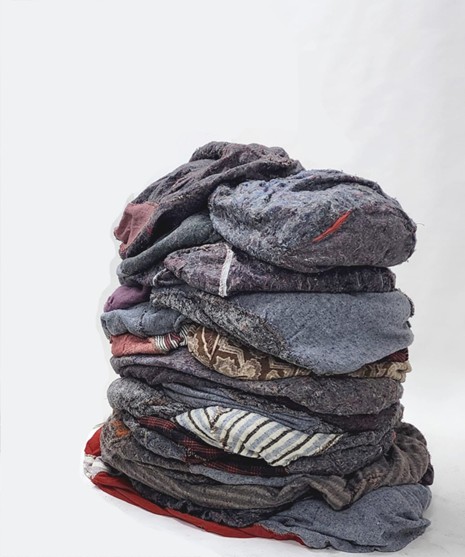
Exposed existences, helpless bodies thrown into the elements, where protective skies are woven from remnants. Residual matter that becomes soft, heavy, necessary. The blankets are presented now as what remains of other lives — moulted dead skins, remnants of industrial ruin that could still provide shelter.
The flattened, the piled, the accumulated. A landscape of mounds. This topology of compression renders differences illegible, cancels layers, levels strata. Through an austere arrangement and a minimalist gesture, it throws us before three textile formations composing a landscape of rising horizontals — granting us time: the time to contemplate ruin.
Materials: Blankets recovered from a textile factory in the process of closing, hand-sewn with cotton thread. Variable dimensions.
Images
3.4 — Catarsis Collective · 2004
Ceronuevecincuentaytres (09:53 a.m.)
"…se retuerce de dolor mi corazón…"
— Jeremías 4:19b
Motivated by the tenth anniversary of the bombing of the AMIA Jewish community center, we created together the installation "ceronuevecincuentaytres." The work takes its title from the exact time — 9:53 a.m. — at which the bomb exploded in the AMIA building.
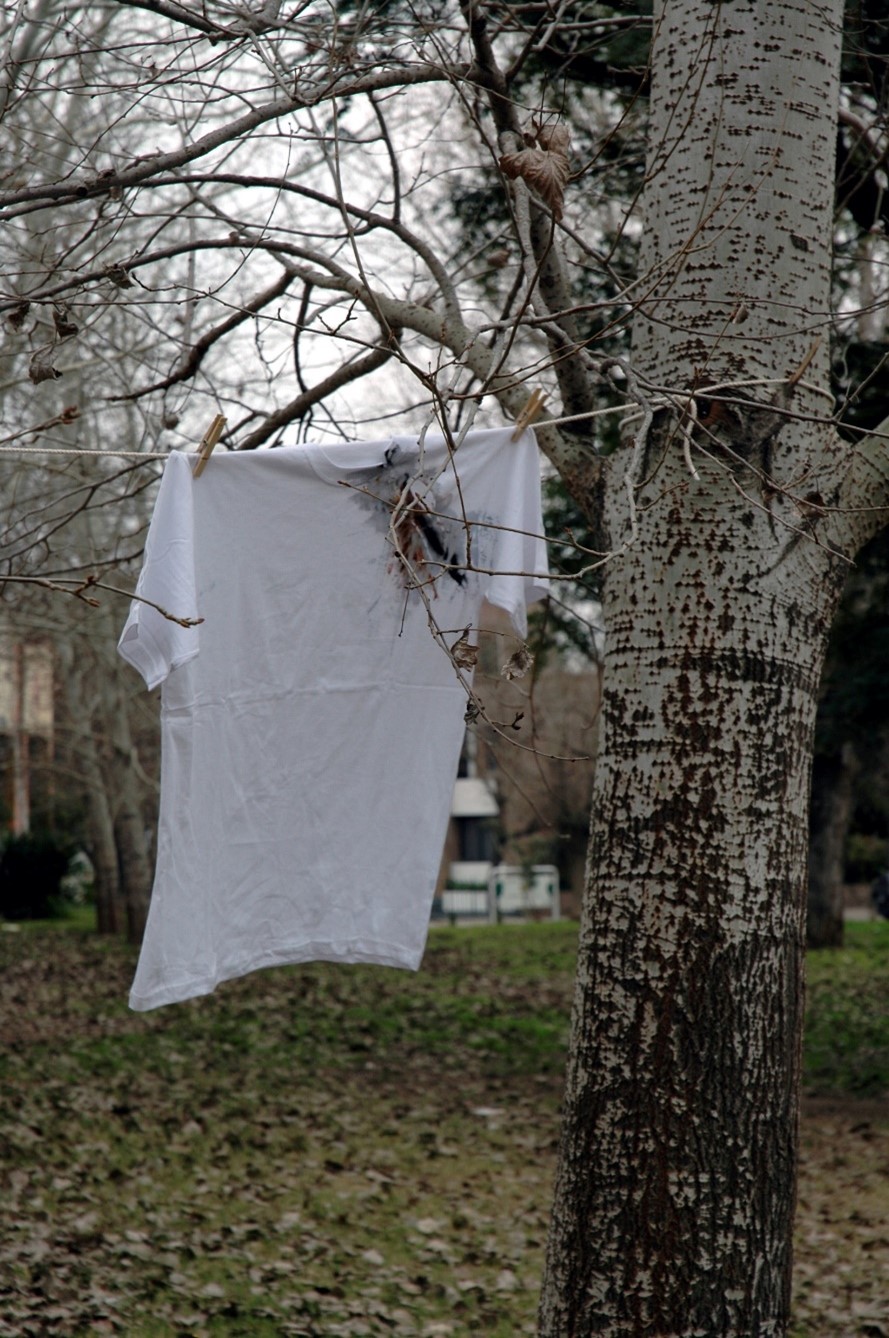
There are 85 white t-shirts, painted and torn on the side of the heart (kriah).
The t-shirt is the intimate garment closest to the body, to the heart.
The t-shirt is white because white is the color of mourning in Judaism.
The t-shirts are painted to individualize them — no two are alike.
The t-shirts are torn on the side of the heart (k'riah). The k'riah symbolizes the grief of those who remain — a sign of mourning made by tearing the garments of the bereaved.
Se enlazaban los árboles, las remeras y las sogas.
Dos árboles gigantes sostenían una soga fina y resistente.
Por un momento dudé que tuviera fuerza para soportar el peso de los cuerpos.
Cuando colgaron la primera remera blanca, temblé.
Estaba sostenida con broches de madera y dejaba entrever la cabeza que no estaba, la rasgadura del corazón sangrante.
Valeria y Myriam fueron colgando las demás remeras hasta llenar la soga.
Los árboles, alrededor nuestro, se preparaban para sostener las siguientes remeras.
Se completó la primera soga. Diez remeras de distinto tamaño.
Diez cuerpos que no estaban.
Diez corazones con la sangre seca, y familiares y amigos llorando sus muertes.
El tercer árbol esperaba con los brazos abiertos.
Colgaron la segunda soga y muchas otras remeras blancas.
Última soga. Última remera. La más pequeña. La remera de un niño.
— Marcela Chaoul
Detalle
Venues: Plaza Lavalle, Galería Gieso, Bienal Textil WTA 2009, Palais de Glace, Colegio Tarbut, Museo de las Colonias Judías de Domínguez.
Images
Plaza Lavalle, Palacio de Justicia de la Nación
Bienal Textil WTA 2019, Palais de Glace, Buenos Aires
Museo de las Colonias Judías, Galpón de Inmigrantes, Domínguez
Comunidad Lamroth Hakol
Colegio Tarbut
Alumnos del Colegio Tarbut
3.5 — Catarsis Collective · Colegio Tarbut